


Japanese Green Tea: Types and How to Brew Each One
Japanese green tea types explained: sencha, gyokuro, bancha, kukicha, hojicha, genmaicha and matcha, how each tastes, and the water…
Country, language & currency
or
By the Tealyra Tea Team · · 5 min read

In short: Jasmine Bi Luo Chun is a curly, downy Chinese green tea from the Dong Ting mountains that has been scented with fresh jasmine blossoms. It is lighter, fruitier and quicker to brew than jasmine dragon pearls, and because the thin leaves give up their flavour fast, it is one of the best green teas for cold brewing on a hot day. Brew it at 75 to 80°C for 2 minutes hot, or steep it overnight in the fridge for a clear, floral iced tea.
This guide is written for tea drinkers in Australia: grams and millilitres, °C first, and every link points to tealyra.com.au. It covers what the tea is, how it is scented, how it compares to the other jasmine teas we stock, and how to brew it through a Queensland summer or a Melbourne winter.
Bi Luo Chun, "Green Snail Spring," is one of China's ten famous teas. It comes from the Dong Ting hills beside Lake Tai in Jiangsu, where tea bushes have traditionally been planted between peach, plum and loquat trees. The leaves are picked very early in spring as a bud and one small leaf, then rolled by hand into tight little spirals covered in fine white down. Dry, it looks like a bowl of tiny silver-green snail shells. Brewed, it gives a pale, slightly cloudy liquor with a fruity, nutty sweetness and almost no bitterness. The unscented version is on our Chinese green tea page as Bi Luo Chun.
Jasmine teas are not flavoured with oil or essence. The green tea is made in spring, stored, and then scented in late summer when the jasmine blooms. Fresh blossoms are picked in the afternoon while still closed, layered with the tea overnight as they open and release their perfume, then sifted out in the morning. Good jasmine tea goes through this cycle four to seven times. The downy Bi Luo Chun leaf is especially absorbent, so it takes the scent deeply and gives it back cleanly in the cup. The result in our Jasmine Dong Ting Bi Luo Chun is bright jasmine up front, then the fruit and sweetness of the base tea, with a smooth finish and very little astringency.
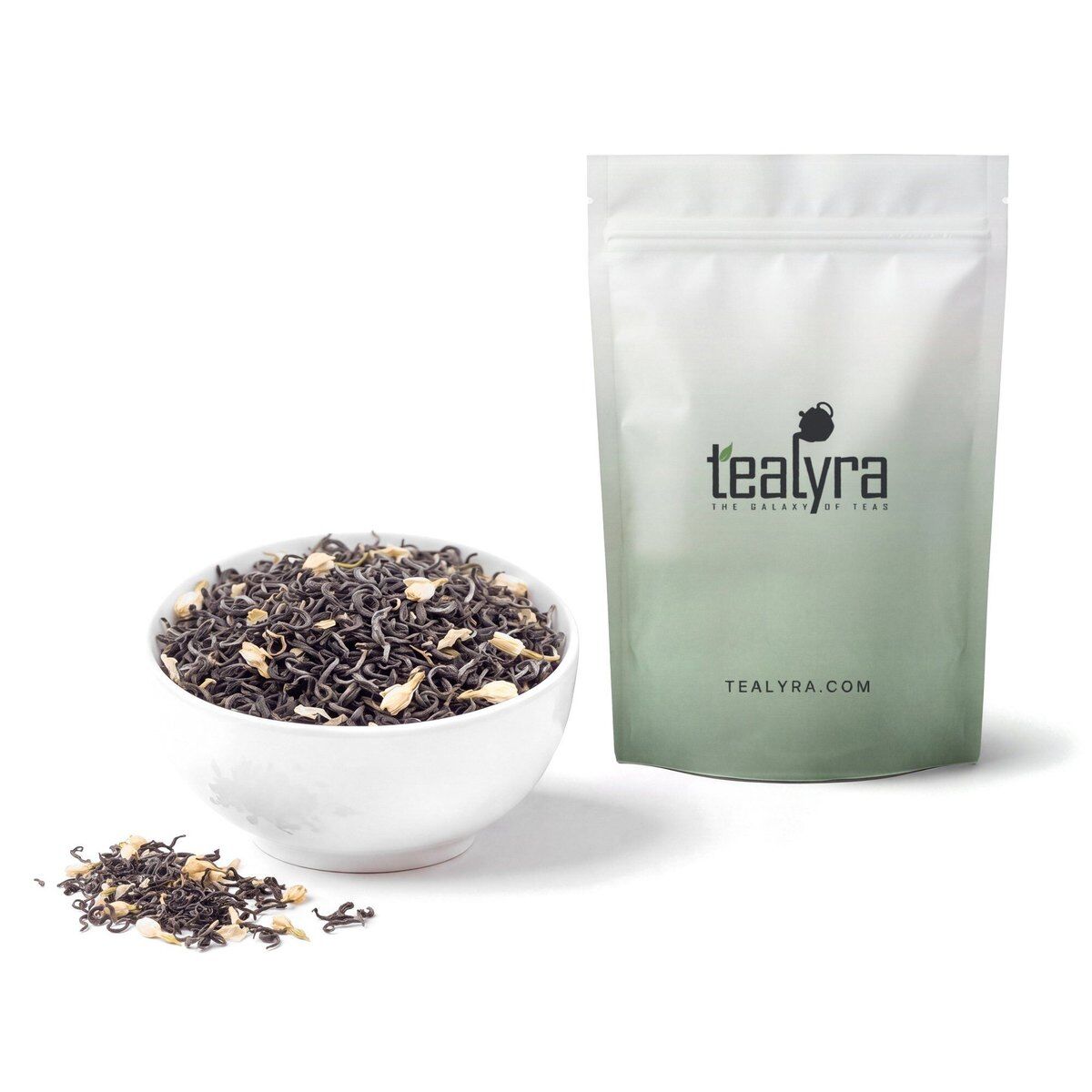
We stock several jasmine teas, and they are not interchangeable. The base leaf and the shape change how the tea brews.
| Jasmine Bi Luo Chun | Jasmine Dragon Pearls | Everyday jasmine green | |
|---|---|---|---|
| Leaf | Tiny downy spirals, bud and one leaf | Hand-rolled pearls, bud and two leaves | Open or lightly twisted leaf |
| Taste | Fruity, sweet, light jasmine, very smooth | Rich, rounded, heavy jasmine, creamy body | Grassy base, straightforward jasmine |
| Brew time (hot) | 2 minutes, opens fast | 3 to 4 minutes, pearls unfurl slowly | 2 to 3 minutes |
| Re-steeps | 3 to 4 | 4 to 6 | 2 to 3 |
| Cold brew | Excellent, 6 to 8 hours | Good, 10 to 12 hours | Good, 6 to 8 hours |
| Best for | Summer, iced tea, lighter palates | Winter, a slow pot, gifts | Everyday hot cups |
If you already drink our Jasmine Dragon Pearls and want something lighter for the warmer months, Jasmine Bi Luo Chun is the natural next step. The full range is on our jasmine tea page.
A glass teapot or a tall glass is the traditional vessel for Bi Luo Chun, because watching the spirals sink and unfurl is half the pleasure. Chinese tea drinkers often use the "top pour" method: fill the glass with warm water first, then drop the leaves on top and watch them fall.
From November to February most of Australia is better served by a jug in the fridge than a kettle, and this tea is built for it. Cold water pulls out the sweetness and the jasmine but very little of the tannin, so the result is clear, smooth and never bitter.
Cold-brewed Jasmine Bi Luo Chun also makes a good base for a non-alcoholic spritz at a Christmas lunch: chilled tea, soda water, a squeeze of lime and a sprig of mint.
Scented green teas lose their perfume faster than black teas, and Australian summer heat speeds that up. Keep the pouch sealed with the air pressed out, store it in a cupboard away from the stove and the sun, and finish it within six to nine months of opening. Do not put it in the fridge unless it is in an airtight container; condensation and the smell of last night's curry both get into tea. A 100 g pouch at 2.5 g a cup is about 40 hot cups, or ten litres of cold brew, so buy a size you will finish by autumn.
Yes. The base is Bi Luo Chun, a famous Chinese green tea from Jiangsu. The jasmine scent is added afterwards with fresh blossoms, not flavouring, so the tea stays a true green tea.
About the same as other Chinese green teas, roughly 20 to 35 mg per 250 ml cup when brewed as above, which is around a third of a cup of coffee. Cold brew comes out a little lower.
Almost always the water was too hot or the steep too long. Drop to 75 to 80°C and 2 minutes. If it is still harsh, use slightly less leaf.
Neither; they suit different moments. Pearls are richer and slower, ideal for a winter pot. Bi Luo Chun is lighter, fruitier and brews faster, which makes it the better summer and iced tea.
Yes. It is stocked on tealyra.com.au along with Jasmine Dragon Pearls and the unscented Bi Luo Chun, so you can order all three and compare them side by side.
Japanese green tea types explained: sencha, gyokuro, bancha, kukicha, hojicha, genmaicha and matcha, how each tastes, and the water…

Jasmine dragon pearls grades compared: leaf pluck, scenting rounds, pearl size and silver tips, and how our four grades differ in the cup…

Sencha explained: how Japan's everyday green tea is made, what it tastes like, the grades and steaming styles to know, and how to brew it…