


Brewing Tea for a Crowd: Big-Batch Tips for the Holidays
How to brew loose leaf tea for 10, 20 or 40 guests: ratios per liter, a concentrate method, keeping tea hot without bitterness, and the…
Country, language & currency
or
By the Tealyra Tea Team · · 5 min read

In short: classic Earl Grey is black tea scented with bergamot, and that is the whole recipe. Russian Earl Grey starts the same way and then adds lemongrass, orange peel and a scattering of blue cornflower petals, so the cup is zestier, more citrus than perfume, and a little lighter in body. Classic is the one for milk and a biscuit; Russian is the one for a slice of lemon, a spoon of jam or a tall glass of ice on a 35°C afternoon. Below: where each style comes from, how they taste side by side, how to brew them and which one to pick.
Earl Grey as we know it is a British blend: black tea flavoured with oil from the bergamot orange, a bitter citrus grown mostly in Calabria. The name honours Charles Grey, prime minister in the 1830s, and the story usually involves a gift of tea from China, though no one can prove it. What is certain is that by the late 1800s London tea houses were selling bergamot-scented black tea under his name.
Russian Earl Grey is a blender's variation, not a tea from Russia. It takes its name from the Russian habit of drinking black tea strong, from a glass, with lemon rather than milk, and often with a spoon of jam on the side. Blenders added lemongrass and dried orange peel to the bergamot base to echo that lemon-forward way of drinking, and the cornflower petals came along for colour. The result is popular across Europe and increasingly in Australia, where a bright citrus tea suits the climate.
| Classic Earl Grey | Russian Earl Grey | |
|---|---|---|
| Base | Black tea, usually Ceylon or a Ceylon and Chinese blend | Black tea, same base |
| Flavouring | Bergamot only | Bergamot, lemongrass, orange peel |
| Aroma | Floral citrus, slightly perfumed | Fresh lemon and orange zest, less floral |
| Taste | Malty black tea, bergamot through the middle, dry finish | Brisker, tangy, a grassy lemon note, crisp slightly tart finish |
| Colour in the cup | Deep amber | Amber, a shade lighter |
| With milk | Very good | Possible, but citrus and milk argue; better with lemon |
| Iced | Good | Excellent |
| Caffeine | About 40 to 60 mg per 250 ml cup | Slightly less, because part of the blend is herb and peel |
Taste them together and the difference is obvious within two sips. Classic Earl Grey is round and a touch perfumed; the bergamot sits on top of a solid black tea. Russian Earl Grey is sharper and more refreshing, with the lemongrass giving a clean, almost green edge and the orange peel adding a sweet-bitter marmalade note under the bergamot.
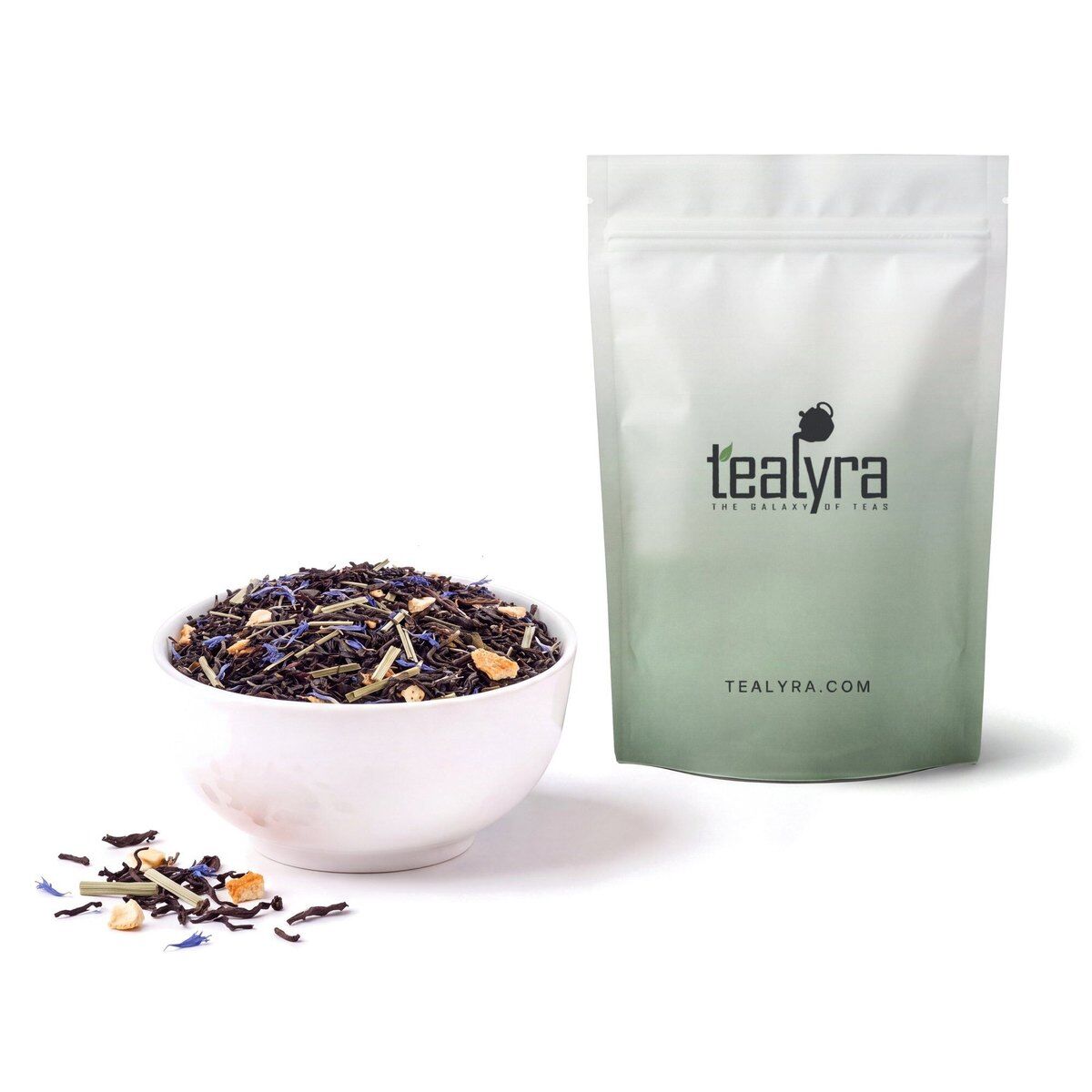
Our full Earl Grey collection also has cream, lavender, French and rooibos versions if you want to take the comparison further, and the black tea range covers the unflavoured bases they are built on.
Both are black teas, so the method is nearly the same. The small differences matter.
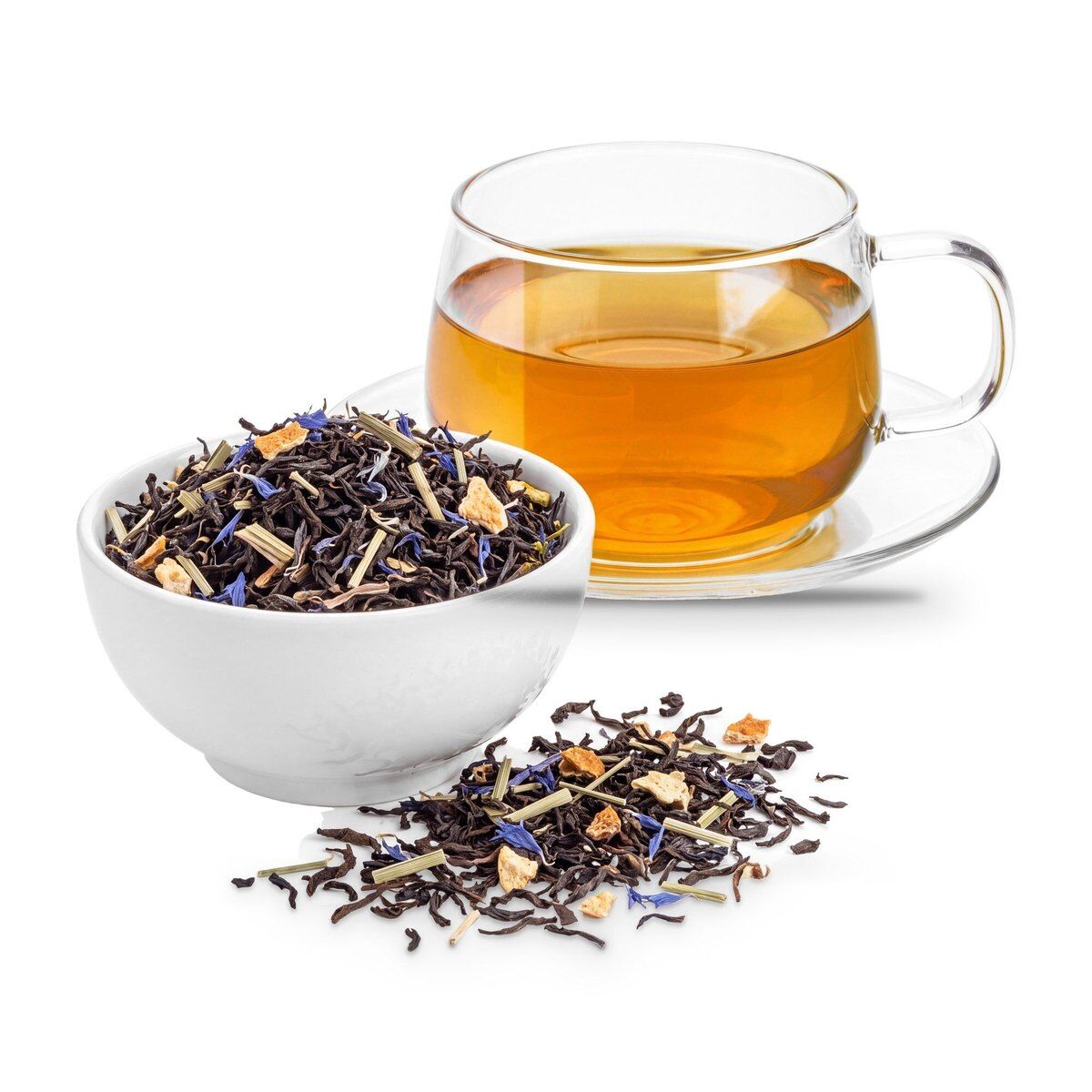
From November to February the Russian style comes into its own. Cold brew it: 10 g of leaf per litre of cold water, 8 hours in the fridge, strain. The lemongrass and orange peel read as fresh lemonade, with no bitterness at all. For a quicker version, brew 5 g in 250 ml of hot water for 4 minutes and pour over a full glass of ice; the melt dilutes it to the right strength. A sprig of mint or a wedge of orange finishes it.
Classic Earl Grey also ices well, but it leans more floral and benefits from a little sugar syrup. Try it as a base for an Earl Grey and peach iced tea: cold brew as above, then add sliced ripe peaches to the jug for the last two hours.
If you drink your tea with milk, start with Earl Grey Classic or Earl Grey Premium. If you drink it black, like lemon in your tea, or want one blend that works hot in winter and iced in summer, Russian Earl Grey is the better pick. Most Earl Grey drinkers end up with both: classic for the morning, Russian for the afternoon and the esky.
No. It is a European blender's style named after the Russian way of drinking strong black tea with lemon. The tea itself is usually Ceylon or Chinese black tea, flavoured with bergamot, lemongrass and orange peel.
A little. Part of each spoonful is lemongrass and orange peel rather than tea leaf, so a cup lands slightly under a classic Earl Grey, roughly 35 to 50 mg per 250 ml against 40 to 60 mg.
You can, but the citrus and the milk fight each other. A slice of lemon or a teaspoon of honey suits it far better.
Cornflower petals. They add colour to the dry leaf and almost nothing to the taste. Both our Russian Earl Grey and classic Earl Greys carry them.
Russian Earl Grey. The lemongrass and orange peel taste like lemonade when cold brewed, and the lighter body means no bitterness even after a long steep in the fridge.
How to brew loose leaf tea for 10, 20 or 40 guests: ratios per liter, a concentrate method, keeping tea hot without bitterness, and the…

Billy tea, the Australian bush classic: its history, how to boil a billy over a campfire, the gum leaf trick, swinging the billy and the…

Thanksgiving tea pairings for every part of the meal: a pot for arriving guests, teas that stand up to turkey and gravy, and the best cups…